

Track 7
How one Sinatra recording opened the door to forty years of memories

One afternoon recently,
I found some old CDs gathering dust.
I put some into my car (containing the only CD player I currently have).
One CD cover in particular caught my eye. I loaded it and instinctively skipped directly to Track 7, and soon discovered that the song had been quietly storing far more than just great music.
Why Track 7?
There are almost countless versions of Bart Howard’s Fly Me to the Moon.
However, this is the one. The Sands, live in 1965.
Even now, I can’t quite hear those opening bars without smiling.
Before Sinatra has sung a note, Count Basie has already set the mood. A few simple chords. Totally Basie. Nothing flashy. Nothing wasted. Just enough to establish the shape of what is coming.
Sinatra starts to chat over Basie’s sparse chords. Those famous jive-lines, hipper than hip:
“Now, this man here is gonna take me by the hand and he gonna lead me down the right path to righteousness and all that other mother jazz... in the right tempo!”
And then the verse hits
The timing is impeccable.
The confidence effortless.
It’s one of the greatest live track openings.
Everything about the performance feels easy, yet every detail is perfect.
Basie’s band.
Quincy Jones’ arrangements.
World-class musicians playing live, in real time, listening and responding to one another.
The room itself seems to have been captured. Not just the notes, but the atmosphere.
The confidence.
The swing.
The sheer joy of it.
My friend Jon loved this recording.
So did I.
In the early 80s, we would sing along to it, dance around to it, and marvel at how something could be simultaneously so sophisticated and so much fun.
I hadn’t listened to it for years.
Within seconds, I was transported back to people and places I hadn’t thought about for decades.
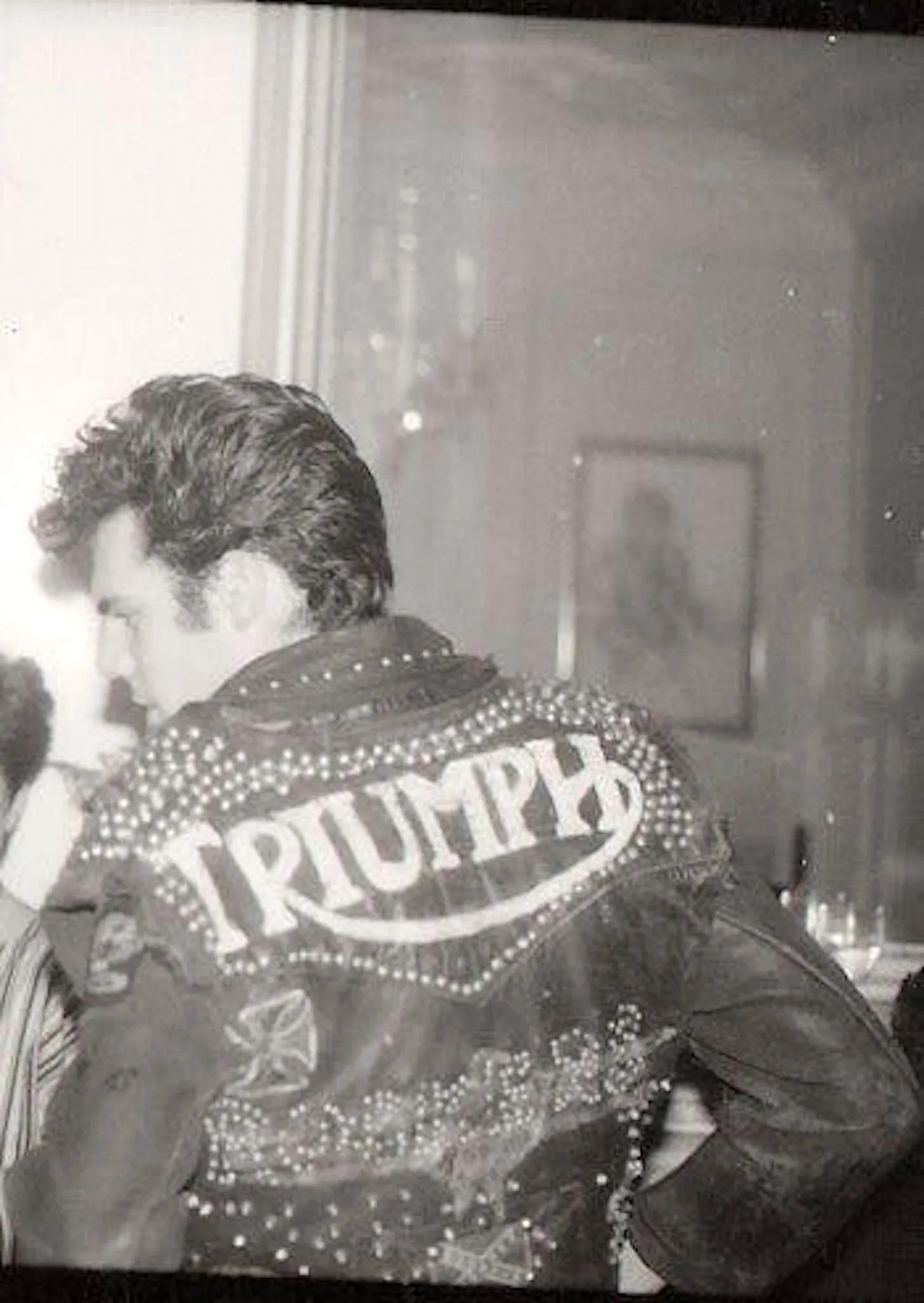
The first person to appear was Jon.
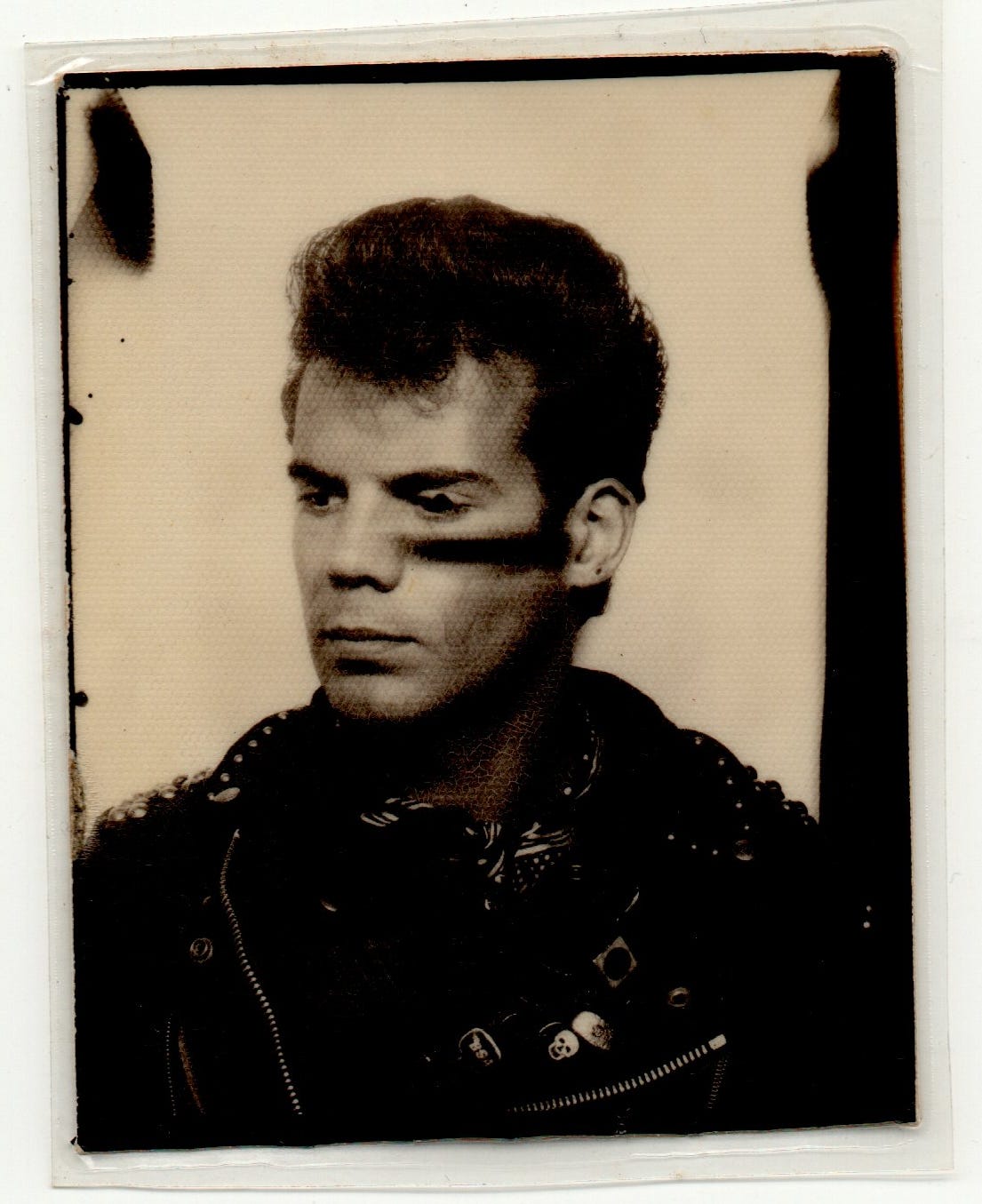
I first met him when I was about fourteen. He was a couple of years older than me and already seemed impossibly sophisticated.
I would arrive at the back gate of school on a battered BSA Bantam motorcycle that I was far too young to be riding legally. Jon would often be there too, smoking Cocktail Sobranies, wearing a leather motorcycle jacket over his school blazer, and looking impossibly cool in a pair of Second World War fighter pilot goggles and a white silk scarf.
We became close friends and remained so for more than a decade.
Jon was one of those rare people who seemed equally at home in completely different worlds. He was a gifted musician who could sit down at a church organ and play Bach fugues beautifully. He loved Sinatra, Count Basie, Pink Floyd and Rockabilly. He appreciated the finer things, classic British motorbikes, art, literature, philosophy, and above all, spirited conversation. He had a taste for vintage wines and Champagne, aged single malt Whisky, and gourmet food, which he could cook well too.
He was also extraordinarily handsome and very tall. Had he wanted to, he could easily have worked as a model. Women visibly reacted to him. Heads turned when he entered a room. Yet despite his confidence and charm, there was also something surprisingly shy and private about him. Add to this that he was a gentle man, in the true sense of the words.
At the same time, he was a biker, a mischief-maker and an inveterate rule-breaker.
He possessed a kind of effortless glamour that attracted people wherever he went. Looking back, I realise now how complex he was. Jon was also carrying far more pain than most should or that most of us understood.
At the time, however, none of that was clearly visible to me. At best there were momentary fragmented glimpses. And, to me he was simply Jon.
And whenever I hear Track 7, he’s still the first person I think of.
Washington, D.C.
The next memory surprised me.
Not because I had forgotten it entirely, but because I hadn’t thought about it in decades.
In late 1983, I travelled to the United States to visit my then-girlfriend, Tolley. (There’s more about Tolley in my articles about Wham!) We spent Christmas and New Year in Los Angeles before heading east to Washington DC to stay with her aunt, Rosemary ‘Rose’ Casparis.
Rose was one of those people who seemed to know everybody. She wasn’t a politician, but she moved comfortably in DC political circles and spent much of her time advocating for causes she believed in. Years later, I realised how little I actually understood about what she was doing. At the time, she simply seemed connected to a fascinating world that existed somewhere between politics, activism and public service.
While we were in DC, Rose invited Tolley and me to see Count Basie perform at the Old Post Office Pavilion.
This wasn’t simply a concert.
Count Basie was one of the giants of twentieth-century music, a figure whose influence extended far beyond jazz. By then he was already in poor health and was brought onstage in a wheelchair. If memory serves, it was most probably the last time he performed in Washington before his death a few months later.
I remember being struck not only by Basie, but by the audience.
Everyone seemed impossibly well-dressed. Zoot-suited men. Exquisitely glamorous women. The effortless elegance of it all.
It felt less like a concert crowd and more like a gathering of people who had somehow stepped out of another era. Looking around the room, I realised I was probably one of the scruffiest people there.
The atmosphere was extraordinary.
And yet, strangely, when Track 7 brought that evening back to me, it wasn’t Basie, his band, or even Tolley who emerged most clearly.
It was somebody else entirely: a man standing on the edge of a very different story.
Gray & Dennis
Originally I remembered his name as Gray Handley Jr.
And I remembered that I met this man through Rose and Tolley during that visit to Washington. In Rose’s apartment.
However, since first publishing this piece Tolley pointed out (in the comments section) that, after just over forty years, my memory was slightly off.
What I remember most vividly is not what this man said, what he did, or even what his role was, or even (evidently) what his name was.
It was how he looked. I had never seen a person, in particular a person whom to me appeared to be young, look so ill.
In actual fact, as Tolley points out and corrects, Gray was Rose’s husband. The man I met briefly in Rose and Gray’s home was named Dennis.
Dennis was not an elderly person in a hospital bed. He was a young man visiting the apartment I was a guest in. He appeared desperately thin and physically fragile. Looking back, the only comparison I can think of is that he reminded me of photographs of concentration camp survivors. At the time, I had no frame of reference for what I was seeing.
Something was clearly wrong with him.
People spoke about it quietly. In fragments. In lowered voices.
I remember trying to piece together what was going on from snippets of conversation. There was talk of a mysterious illness. It seemed to affect gay men. Doctors didn’t appear to fully understand it. Nobody seemed entirely sure what was happening.
Or perhaps they did understand more than I realised and were simply trying to shield me from the details.
Either way, I left Washington confused. And a short time later Tolley got word that Dennis had passed away.
Only years later did I fully appreciate what was unfolding around us.
The AIDS crisis was still in its early years. The language, the understanding, the public awareness and the treatments that would eventually emerge all lay in the future.
At the time, it was simply a room full of clues that I didn’t yet know how to interpret. And I didn’t know how influential Rose and Gray would eventually become in this arena.
I had no idea that another person already woven into these memories would eventually become connected to this story too.
That person was Jon.
Diverging Lives
By the mid-1980s, Jon’s life and mine had begun to move in different directions.
Not suddenly.
Not through any disagreement.
Just gradually. As happens.
I was becoming increasingly immersed in recording studios, songwriting, production and live work. Music was turning from an obsession into a career. The opportunities seemed endless and I threw myself into them completely.
Jon, now known to most by his AKA (or perhaps alter ego)— Ricki—was taking a very different path.
On paper, hands down, he should have been the success story.
He was exceptionally intelligent. A natural musician. The sort of person who could master things with seemingly effortless ease.
He could sit at a church organ and play Bach beautifully.
He could read sheet music fluently.
He had been steered towards Oxford or Cambridge to study philosophy and literature.
Yet he rejected all of it.
Instead, he spent his twenties riding motorcycles around London as a dispatch rider, and delving ever deeper into the darkest recesses of the city’s gay scene and hard drug culture.
And somehow, despite this and earning very low wages, he always seemed more glamorous and switched on than the rest of us.
I remember one summer in Spain, probably one of the last times I saw him. A group of us had gathered at a house near Dénia. We spent our days by the pool and our evenings drifting between bars, restaurants and clubs.
Jon was, as always, the best-dressed person in the room.
And invariably the centre of attention.
On one memorable evening, after several drinks, Jon quietly persuaded me and my credit card to order absolutely everything on a restaurant menu.
Every starter.
Every main course.
Every seafood dish.
Every dessert.
The owner looked baffled.
My friends looked horrified.
Jon looked delighted.
When mountains of food began arriving at the table, everyone burst out laughing.
It was ridiculous.
Extravagant.
Completely unnecessary.
And entirely typical of Jon mischievous style.
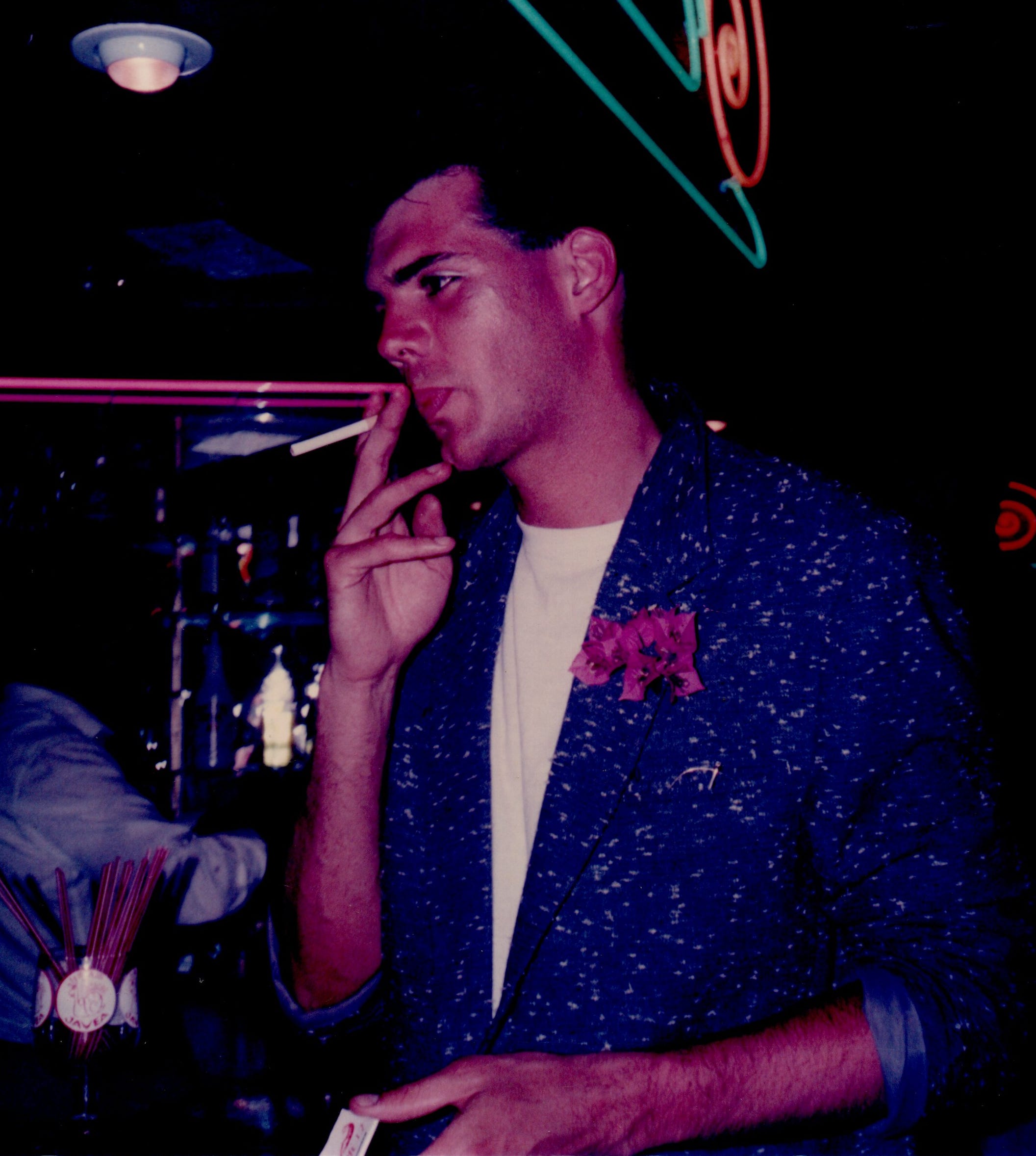
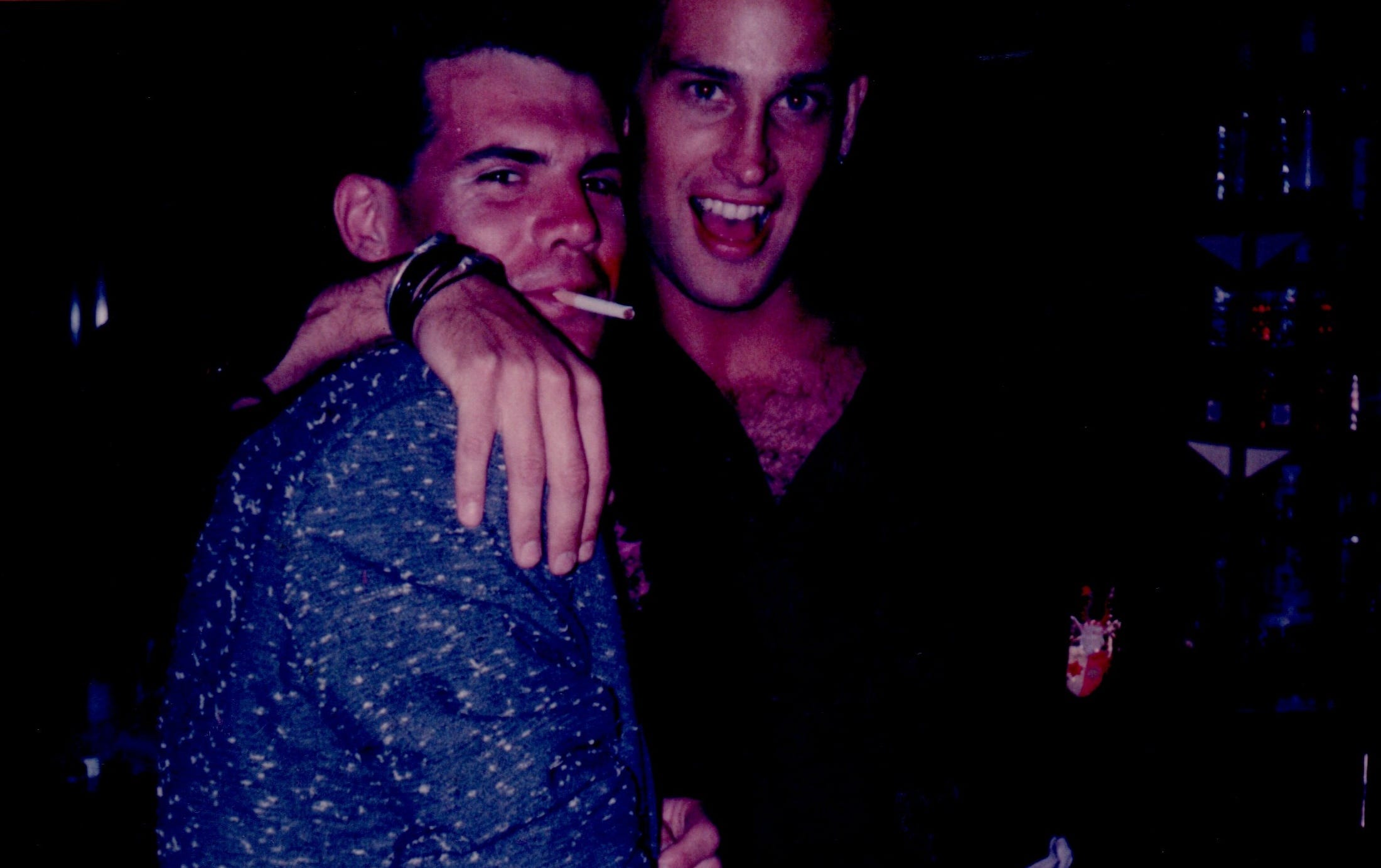
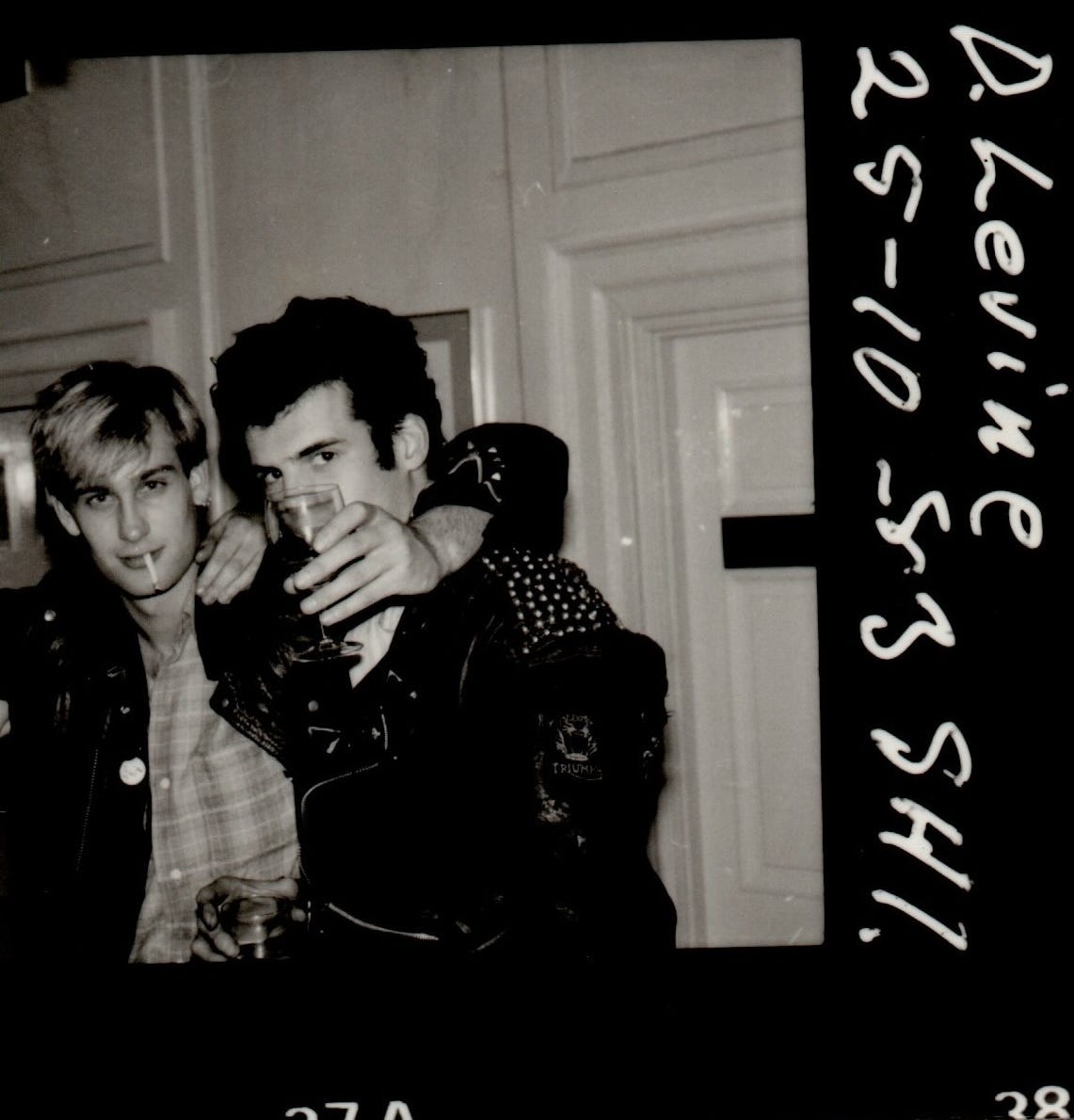
Looking back now, what strikes me is how alive he was.
How full of energy.
How impossible it seemed that somebody like Jon could simply disappear.
But while our careers, friendships and interests were moving in different directions, another story was unfolding in the background.
Neither of us fully understood it yet.
Most people didn’t.
But it was already there.
The Phone Call
Then, my life accelerated.
Recording contracts.
Songwriting.
Live shows.
Travel.
Then, before I knew it, I was a father.
The years that followed became a blur of work, music and responsibility.
Somewhere in the middle of all that, I lost touch with Jon.
There was no argument.
No dramatic farewell.
No conscious decision to end the friendship.
Life simply carried us in different directions.
For years, I assumed Jon was somewhere out there doing what Jon had always done.
Riding motorcycles.
Causing chaos and mischief.
Turning heads.
Being gloriously and unapologetically himself.
Then, maybe a year after the birth of my daughter, I decided to track him down.
I phoned a mutual friend in London and asked if she had his current phone number or address.
Instead, she dropped a bombshell.
Jon was dead.
I remember the shock of it.
Not simply that he had died. And before he reached thirty.
That was terrible enough.
It was the realisation that the story had already ended and I hadn’t known.
While I had been busy building a career, writing songs and now raising a child, an entire chapter of somebody else’s life had unfolded beyond my view.
Only afterwards did I begin to learn what had happened.
Jon’s Path
The details emerged slowly.
A conversation here.
A memory there.
Another piece from somebody else years later.
Much as I had pieced together parts of Jon’s very troubled childhood and tragic home life over many years, I found myself piecing together the end of his life in much the same way. The picture was not pretty, in parts truly shocking, and way too private for here.
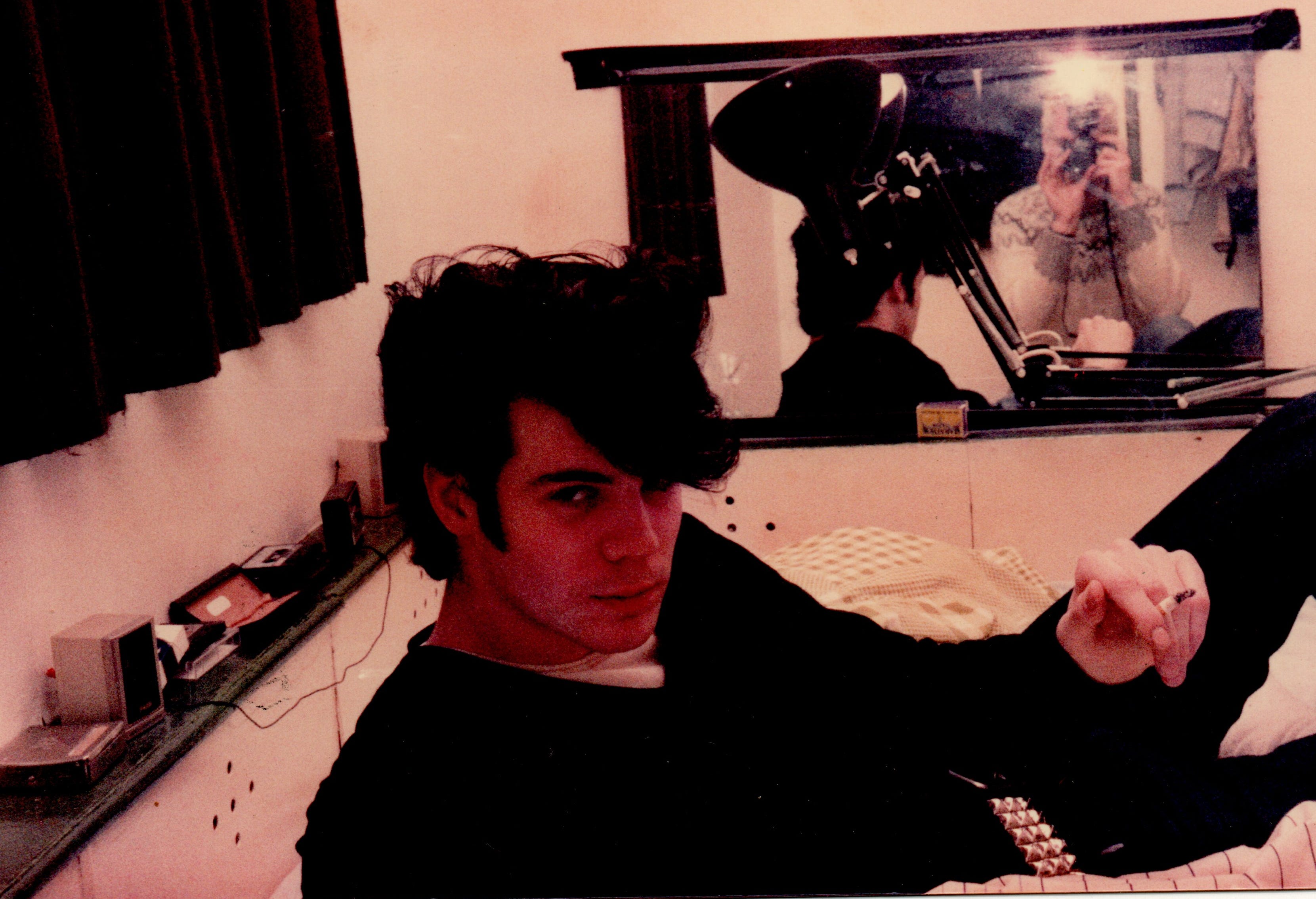
By then, HIV and AIDS were no longer mysterious terms whispered in corners. The epidemic had become one of the defining stories of the age.
Suffice to say, that somewhere along the way, Jon had become infected.
I don’t know exactly when.
I don’t know exactly how.
I only know that many of the risks that I knew he took, that I’d witnessed him take, which had seemed abstract, perhaps inconsequential, or even invisible in the early 1980s, had eventually become very real and quite horrific.
The friend I remembered from the school’s back gate, from the church organ, from the Spanish restaurants, and countless other memories filled with almost endless laughter, had found himself facing something unimaginably difficult.
What saddened me most was learning how isolated he had become.
Apparently, as his illness progressed, Jon gradually withdrew from the people around him.
Even those closest to him lost contact.
The charismatic young man who seemed able to walk into any room and immediately become the centre of attention eventually chose to disappear from view altogether.
He died alone.
That fact has always stayed with me.
Not because it defines his life. It doesn’t.
But because it stands in such stark contrast to the person I remember.
The bewitchingly handsome young man in the white silk fighter-ace scarf.
The leather-clad biker.
The talented musician.
The mischievous prankster, who persuaded me to order everything on a restaurant menu.
The friend who once posted me a greeting card, when I was at a seriously low ebb, showing a leather-clad man hanging upside down from a chain. Inside, in immaculate fountain-pen handwriting, he’d written just three words:
“Hang on! Jon”
Years later, I found myself wishing somehow he had.
That Track, Number 7
That’s the strange thing about music.
A photograph maybe captures a single moment, perhaps evena moment that defines the times.
A scent can evoke a place, or a person, an emotion.
But a familiar recording seems capable of carrying entire worlds.
When I put that old CD into the car stereo and skipped instinctively to Track 7, I wasn’t expecting any of this.
I just wanted to hear a great performance.
The effortless swing of Basie’s band.
Quincy Jones’ immaculate arrangement.
Sinatra at the absolute height of his powers.
Instead, the song opened a door.
Out stepped Jon.
Then Tolley.
Then Rose.
Then Gray, who in my memory I muddled with Dennis.
Then a winter night in Washington, DC.
Then an era when nobody fully understood what was unfolding around them.
This whole constellation somehow attached to just under three minutes of music.
The remarkable thing is that none of those memories were lost.
They were simply waiting, dormant.
Stored somewhere inside a recording I hadn’t listened to for years.
These days, whenever I hear Fly Me to the Moon from Sinatra at the Sands, I still marvel at the musicianship, the wit, the elegance and the sheer confidence of the performance.
But I experience something else too.
I viscerally experience old friends.
And for a few minutes, they are all still here with me.

A powerful post and lovely homage to Jon through the Sinatra and Basie song. It's amazing how songs bring back those memories in full force and full color, as if we're jumping back in time and reliving them. As you say, it's amazing that we have entire worlds and people from our past still residing within us and a few notes can bring them back.
As memory does, you have the essence correct but the details are slightly off. The man with AIDS in that apartment was Dennis. Grey is Rosemary's husband. Rose and Grey created a panel in the AIDS quilt for Dennis. And that Count Basie show was. 100%